Source Cmos Usb Pinhole Camera Module for Security, Medical, And Industrial Uses
Find and compare 30 cmos usb pinhole camera module options featuring 1/4-inch and 1/3.2-inch sensors with resolutions up to 1080p. Evaluate fixed and autofocus lenses, USB interfaces, and UVC compliance for diverse integration needs; compare the available evidence and request quotations based on your requirements.
Key considerations
Products List


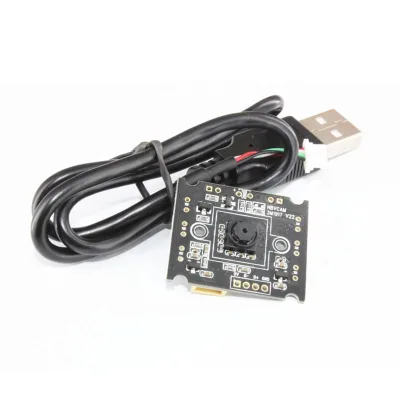

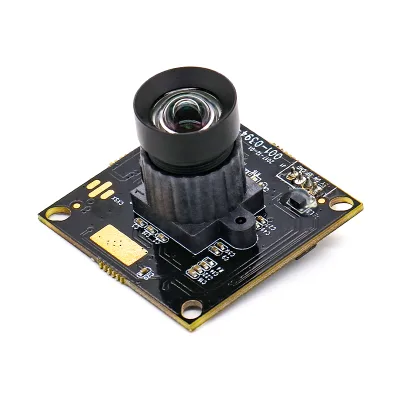


Comprehensive Sourcing Guide
CMOS USB Pinhole Camera Module Sourcing Guide
Procuring a CMOS USB pinhole camera module requires distinguishing between fixed-focus and autofocus variants to match specific deployment needs. The market offers distinct configurations, such as the 1/4-inch Ov5693 sensor delivering 19201080 resolution at 30fps, or the 1/3.2-inch Imx179 sensor providing 32642448 resolution at 15fps. Buyers must verify the exact sensor model and resolution before ordering, as these parameters directly dictate image clarity and frame rate performance in low-light or high-motion scenarios.
Commercial availability varies significantly regarding customization options and interface support. While some modules support standard UVC compliance for plug-and-play operation on Windows and Android, others require specific MIPI interfaces or offer raw output formats. Sourcing teams should confirm whether the supplier provides customization services for lens types, such as manual focus or autofocus lenses, and ensure the module size, typically around 62mm by 9mm, fits the intended enclosure constraints without compromising the pinhole aesthetic.
Product Scope and Observed Listing Signals
The observed product listings indicate a price range between 2 and 40 USD, with minimum order quantities spanning from 1 to 200 units. This wide variance suggests that pricing is heavily influenced by sensor quality, resolution capabilities, and the inclusion of specific features like remote control or wireless technology. Buyers should expect lower unit costs for standard fixed-focus models while anticipating higher prices for high-resolution autofocus variants with advanced customization.
Listing signals also reveal diverse output formats and field of view specifications, ranging from 75° to 77.2° depending on the lens configuration. Some products explicitly state support for Mjpeg and Yuy2 outputs, while others offer raw data capabilities, necessitating a clear understanding of the downstream processing requirements. Procurement teams must scrutinize these signals to ensure the selected module aligns with the system's bandwidth and processing power, avoiding mismatches that could lead to integration failures.
Technical Specifications to Verify
Verification of the image sensor is the primary technical step, as the pixel size and array dimensions define the optical performance ceiling. The available data highlights 1.41.4um pixel sizes across different models, paired with resolutions like 19201080 or 3264*2448. Buyers must confirm the specific sensor model, such as Ov5693 or Imx179, to ensure the module meets the required sensitivity and dynamic range for the intended environment, particularly in applications requiring high-definition clarity.
Focus mode and shutter type are critical parameters that influence image stability and motion capture. The market offers both fixed focus and autofocus options, with electronic rolling shutters being a common standard. Procurement specialists should validate the controllable parameters, including brightness, contrast, and saturation, to ensure the module can be tuned for varying lighting conditions. Additionally, confirming the frame rate, typically 30fps for standard models, is essential for applications requiring smooth video playback.
Compliance and Safety Documentation
Certification requirements are non-negotiable for international deployment, with CE, FCC, RoHS, and ISO9001 appearing frequently in product attributes. These certifications indicate adherence to electromagnetic compatibility, safety, and environmental standards, which are vital for market access in Europe, North America, and other regulated regions. Buyers must request valid certification documents for each specific model, as some listings may only partially cover these standards or apply them to specific lens types rather than the entire module assembly.
Safety and packaging standards also play a crucial role in the logistics and operational readiness of the procurement. Products often adhere to specific packing standards, such as 10x15x20 cm dimensions, and may include features like wireless technology or specific interface supports. It is imperative to verify that the packaging protects the delicate pinhole optics during transit and that the product origin, typically China, aligns with the buyer's supply chain risk tolerance and import regulations.
Cost Drivers and Commercial Terms
The total cost of ownership is driven by the complexity of the sensor and the level of customization required. High-resolution sensors like the 1/3.2-inch Imx179 command a premium over standard 1/4-inch sensors, and autofocus lenses add further cost compared to fixed-focus alternatives. Buyers should analyze the trade-off between resolution and frame rate, as higher pixel counts often result in lower frame rates, which may necessitate a more expensive processing solution downstream.
Commercial terms such as MOQ and lead times vary widely, with observed ranges from 1 to 200 units. While some suppliers offer low MOQs for prototyping, larger orders may require longer lead times or specific production runs. Procurement teams must negotiate clear terms regarding customization availability and interface support, ensuring that the final agreement accounts for potential volume discounts and the specific technical requirements of the project without incurring hidden costs.
Supplier Qualification and Quality Control
Supplier qualification hinges on the ability to provide consistent quality across different sensor models and lens configurations. Given the diversity in product attributes, from manual focus to autofocus lenses, suppliers must demonstrate robust quality control processes that verify pixel array integrity and focus accuracy. Buyers should request sample units to test the controllable parameters and ensure the module performs reliably under the specific environmental conditions of the final application.
Quality control also involves verifying the interface support and output format compatibility with the target operating system. Whether the module supports UVC compliance for Windows and Android or requires specific MIPI interfaces, the supplier must provide detailed technical documentation and testing reports. Establishing a clear communication channel for technical support is essential to resolve any integration issues quickly and ensure that the supplied modules meet the exact specifications outlined in the purchase order.
Long-Term Procurement Checks
Long-term procurement success depends on monitoring the stability of the supply chain and the availability of replacement parts. As technology evolves, sensor models like the Ov5693 or Imx179 may be discontinued, requiring buyers to plan for obsolescence management and potential redesigns. Establishing a relationship with a supplier who can provide advance notice of product lifecycle changes is crucial for maintaining uninterrupted production and avoiding costly last-minute sourcing efforts.
Continuous verification of compliance and performance standards is necessary to maintain product integrity over time. Buyers should periodically audit the supplier's certification status and request updated test results to ensure ongoing adherence to CE, FCC, and RoHS standards. Additionally, monitoring the consistency of module dimensions and pixel sizes ensures that the final product remains compatible with existing enclosures and optical systems, safeguarding the investment against quality drift or specification changes.
FAQs
What resolution and sensor does the WN-L2204 module use?
The WN-L2204 module uses a 1/4-inch Ov5693 CMOS sensor to deliver a maximum resolution of 1920x1080 pixels. It supports Mjpeg and Yuy2 output formats with a 75-degree field of view. This fixed-focus design ensures reliable performance for standard video applications without requiring complex adjustment mechanisms.
Can I customize the cmos usb pinhole camera module features?
Yes, customization is available for these camera modules to meet specific project requirements. Buyers can adjust controllable parameters such as brightness, contrast, saturation, hue, and sharpness. This flexibility allows for tailored image quality adjustments, ensuring the final output aligns precisely with the intended application environment and user preferences.
Which operating systems are supported by the USB interface?
The module is UVC-compliant and plug-and-play for Windows and Android operating systems. This broad compatibility eliminates the need for additional drivers, simplifying integration into various devices. The USB interface ensures straightforward connectivity, making it suitable for diverse applications ranging from security systems to mobile device enhancements.
What certifications do the camera modules typically hold?
The camera modules typically hold CE, FCC, RoHS, and ISO9001 certifications. These standards ensure compliance with international safety and environmental regulations. The presence of these certifications indicates that the manufacturing processes and product quality meet rigorous global benchmarks, providing buyers with confidence in the reliability and legal compliance of the components.
What is the pixel size and frame rate of the Imx179 sensor?
The Imx179 sensor features a pixel size of 1.4x1.4 micrometers and operates at a frame rate of 15fps. It supports a high resolution of 3264x2448 pixels with a 77.2-degree field of view. This autofocus capability ensures sharp imagery, making it ideal for applications requiring detailed visual capture and dynamic focus adjustment.
How small is the module size for the WN-L2204?
The WN-L2204 module has a compact size of 62x9mm, classifying it as a mini camera. This small form factor allows for easy integration into space-constrained devices. The design emphasizes high definition and mini size, ensuring that the camera can be discreetly installed while maintaining robust performance and clear image output.